 ProcessChem
Thermodynamics & process engineering
Process calculations you can run on the plant floor.
ProcessChem looks up fluid properties, solves phase and reaction equilibrium, and sizes heaters, vessels, heat exchangers and fluidized beds. It runs on your phone, with no account and no connection, and its answers say how they were worked out.
On iPhone, iPad and Android.
The app
See it on the phone.
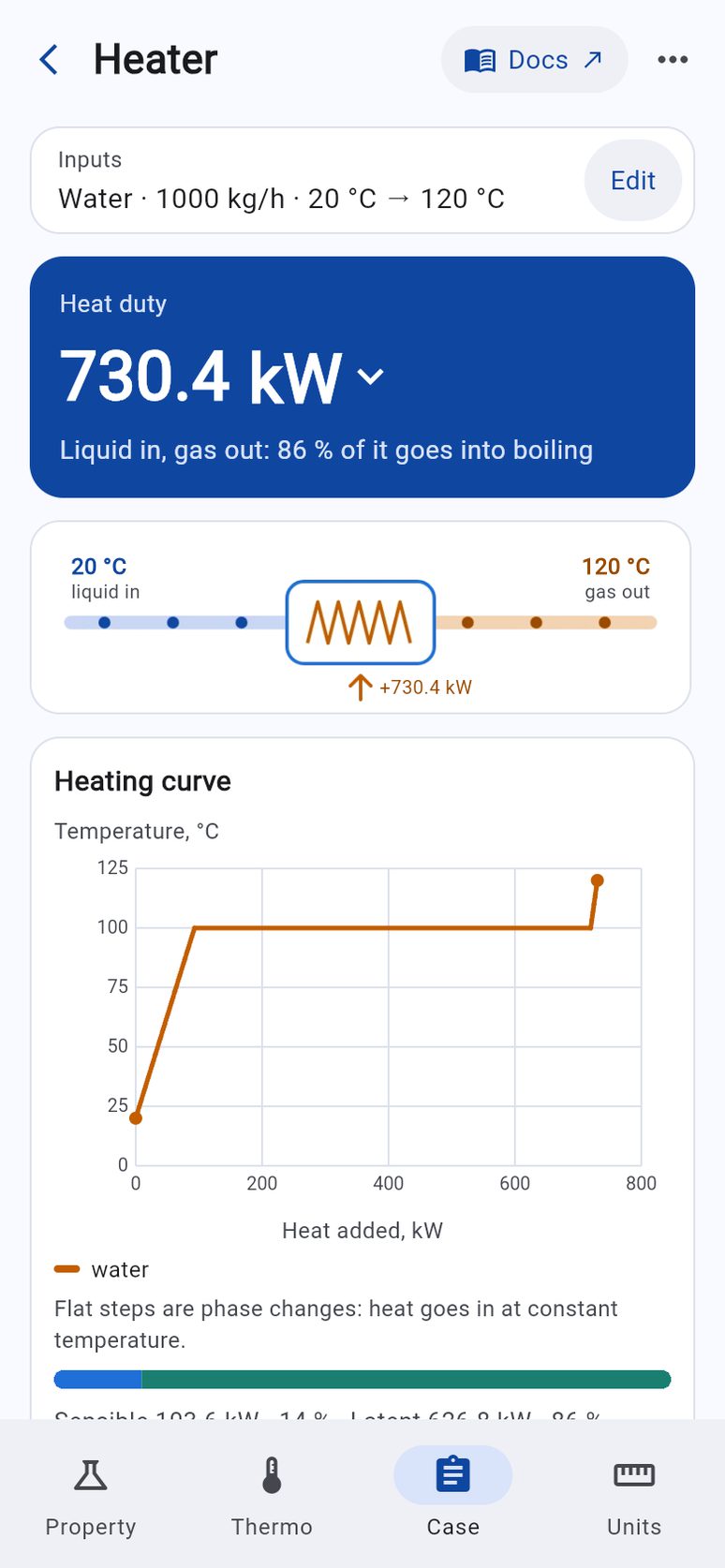
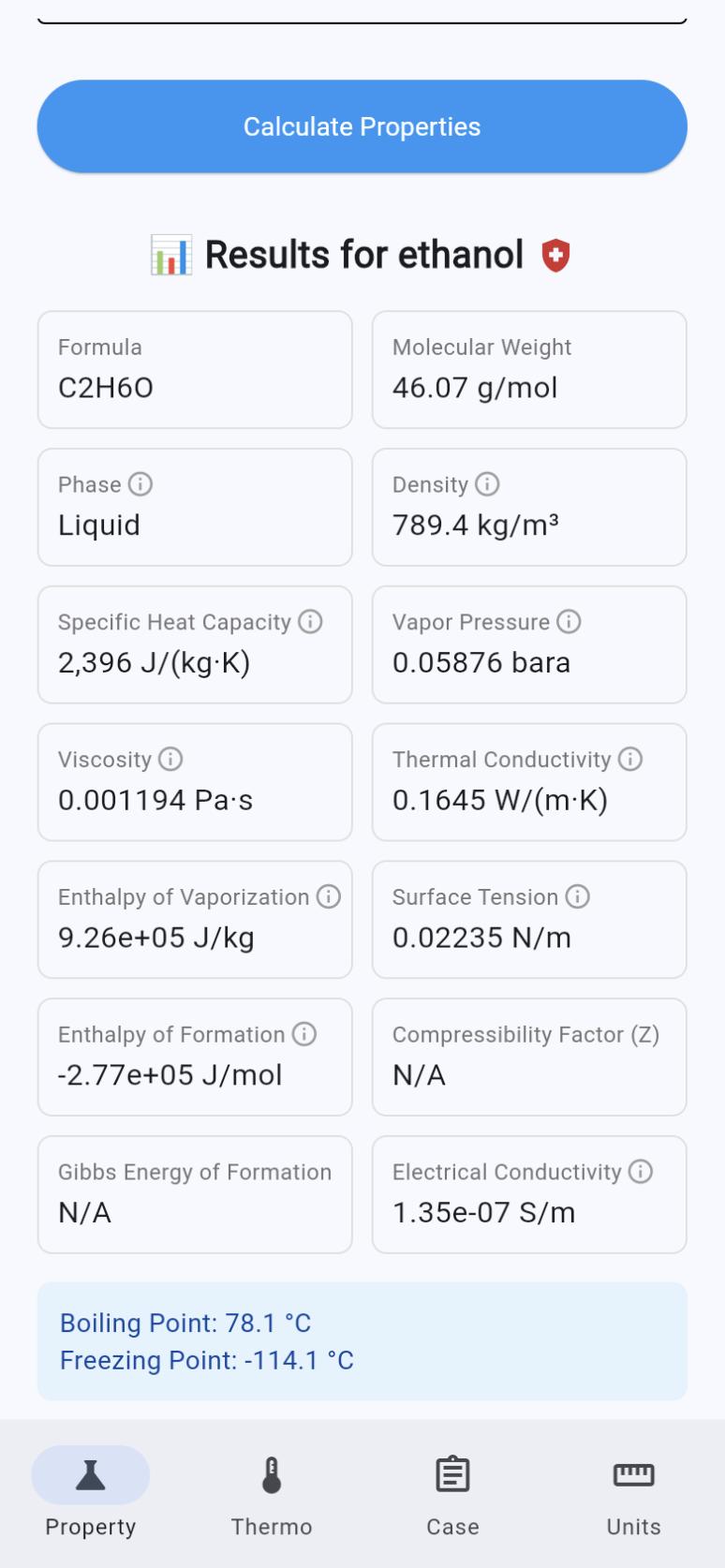
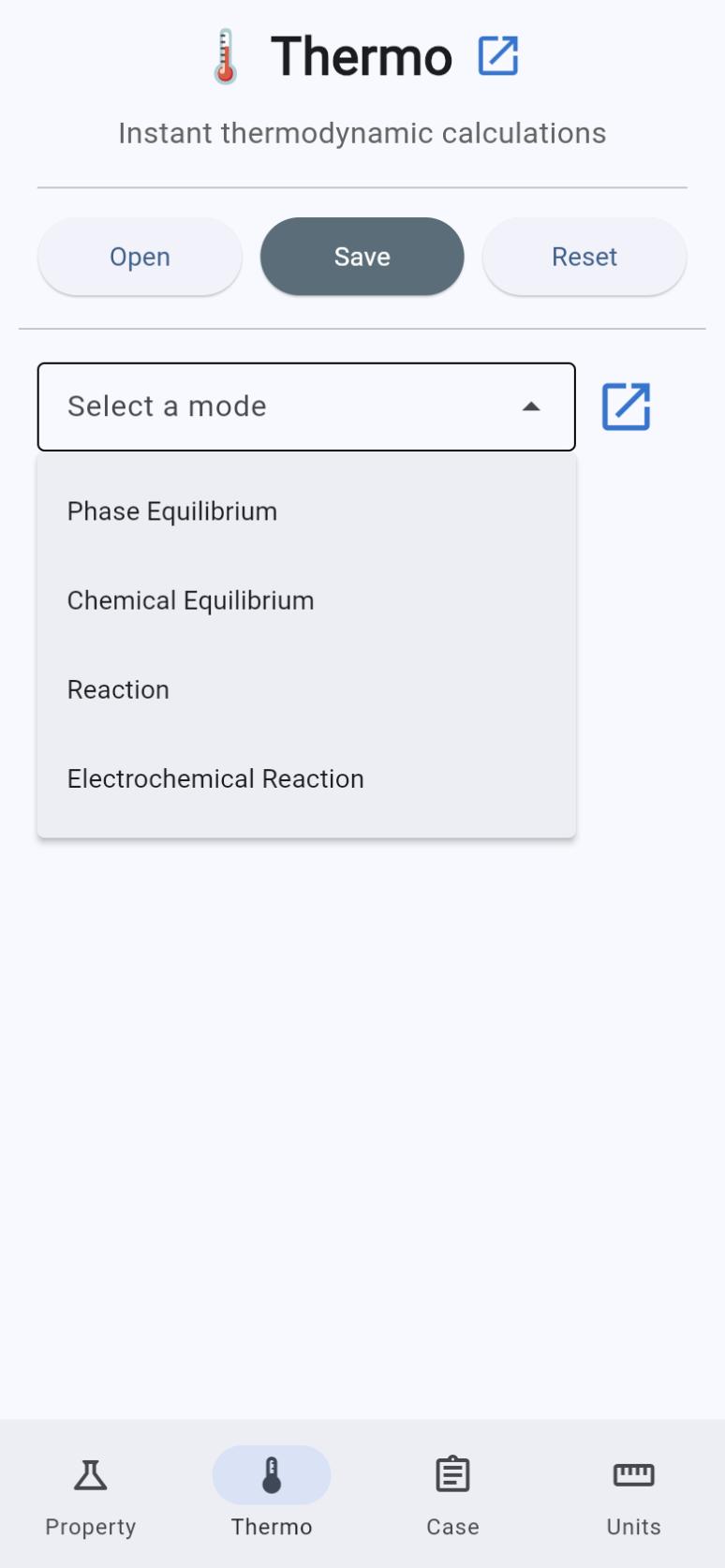
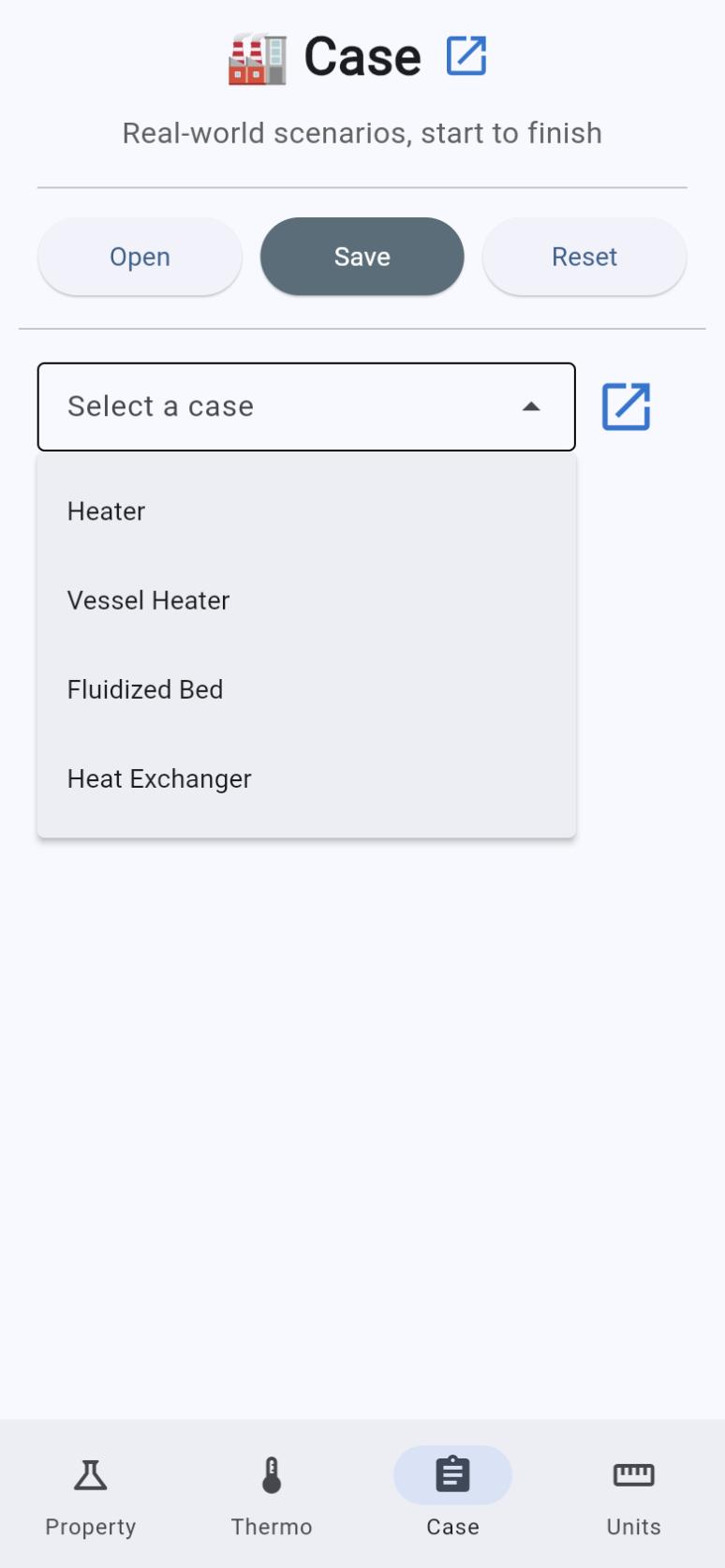
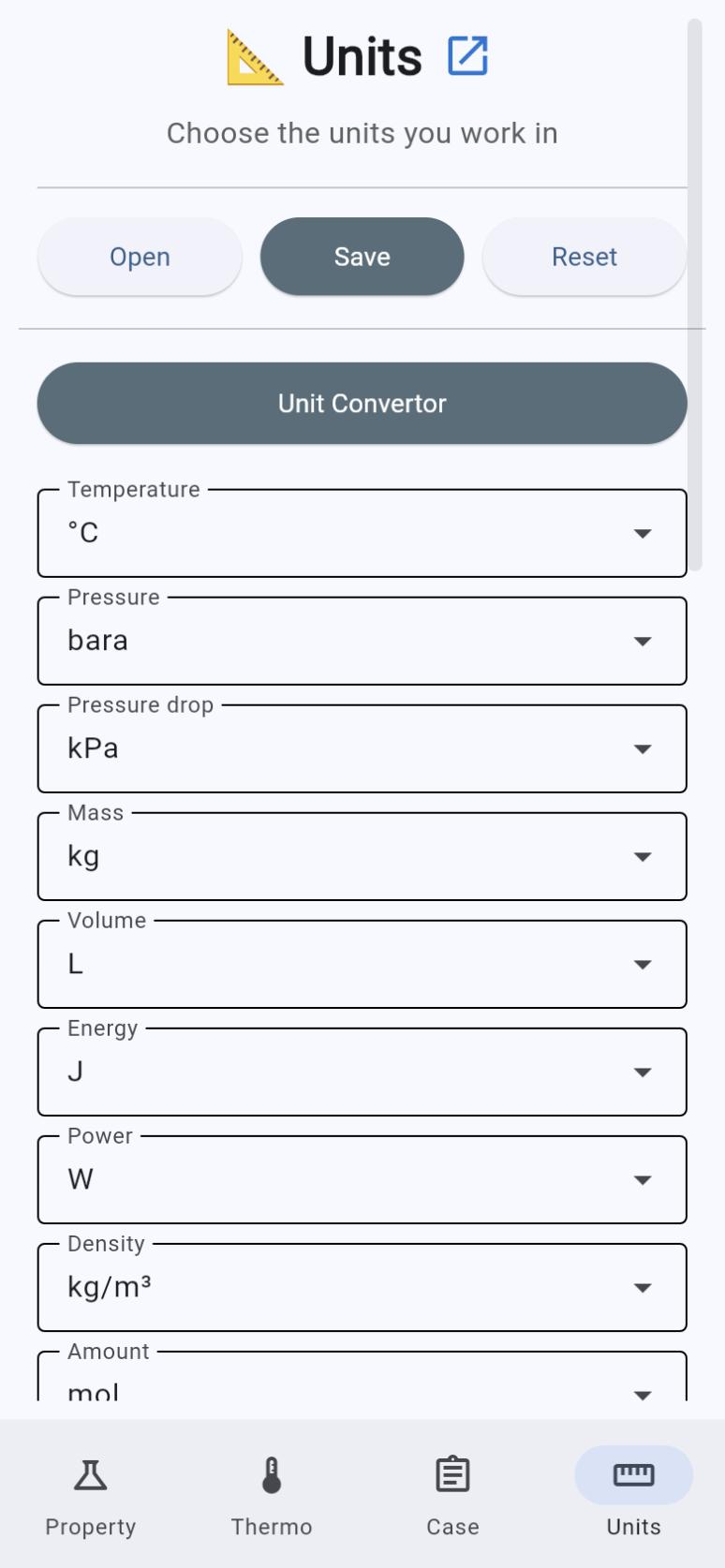
These are actual screens from the app: property results for ethanol with its heat-capacity curve, the four Thermo modes, the Case list, and the Units tab with its presets.
What it does
Four tabs, one engine.
Every tab shares the same thermodynamic core, so a number you read in one place agrees with the answer in another.
PropertyLook up a fluid
Density, heat capacity, viscosity, thermal conductivity, vapour pressure and more for thousands of chemicals and mixtures, charted against temperature, with flash point, flammability limits and exposure limits one tap away. Every value shows where it came from.
- density
- Cp
- viscosity
- Hvap
- Z factor
- surface tension
- hazard data
- data sources
ThermoSolve a state
Flash a stream at any two properties, find the equilibrium composition of a reacting system, balance a reaction with its energy balance, or get the cell voltage of an electrolysis. What goes in and what comes out sit side by side in one table.
- Phase Equilibrium
- Chemical Equilibrium
- Reaction
- Electrochemical Reaction
CaseAnswer a plant question
Start from the question an engineer actually asks. Give what you know and the case finds the rest, answer first, with a heating curve or temperature profile to check it by eye. It refuses a combination that cannot happen, such as heat flowing the wrong way.
- Heater
- Vessel Heater
- Fluidized Bed
- Heat Exchanger
UnitsKeep your own units
Start from a preset (Process, Strict SI, Metric, British or US), then change any quantity on its own, here or right beside a field. Gas volumes convert at the Normal reference you pick, and a built-in converter handles one-off sums.
- bara / barg
- psi
- Nm³/h
- SCFM
- MMSCFD
Foundations
What it stands on.
The numbers come from published reference data and established models, and the results say which methods and data they used.
Reference equations of state
CoolProp's reference equations cover more than 100 fluids. Peng-Robinson with ChemSep interaction parameters handles the rest, and mixtures, with NRTL or UNIFAC for liquids that hydrogen bond. For a single substance you can switch between the two.
Thermodynamic data
NASA CEA coefficients for 1,820 species, plus tabulated data for cement and metallurgical minerals, feed the equilibrium and reaction solvers.
Private by design
No account, no ads, and no connection needed. Your calculations stay on your phone unless you save them to a file.
Documented with the equations.
Each tab and calculation has its own page, with screenshots, that states the governing equations, the data sources and the limits of the method. One page, Accuracy and limits, lists what the app was checked against, how far off it was, and what it does not calculate.